Environmental Justice & Research
I study how environmental harm, infrastructure decisions, and public policy shape everyday life in communities living with legacy contamination, disinvestment, and uneven public services. This work is grounded in civil and environmental engineering, but also draws on environmental law and policy, public health, and community organizing.
A lot of this work happens through documents, datasets, and maps. I spend time with permits, consent decrees, environmental impact documents, and regulatory histories; with data from agencies such as EPA, USGS, and the Census; and with mapping tools that help make patterns of harm and neglect easier to see. I am especially interested in Superfund and other contaminated sites, stormwater and flooding burdens, and infrastructure choices that have concentrated risk in Black and historically marginalized communities.
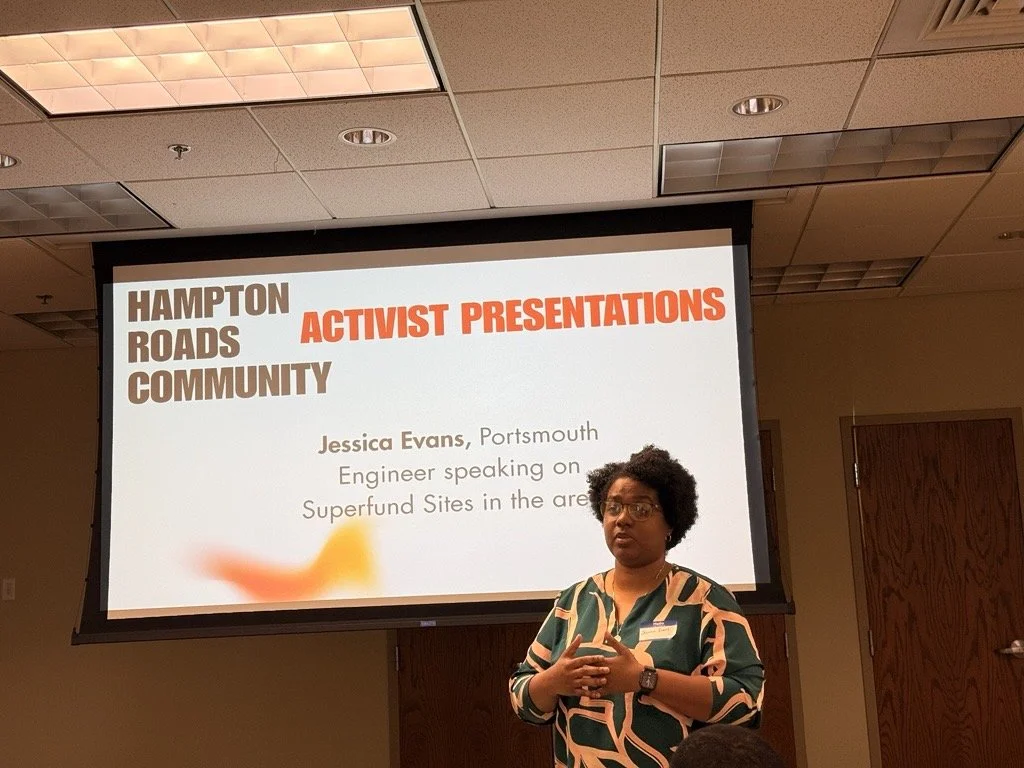
I think of environmental justice research as a way to support and accompany community knowledge, not to replace it. Much of what I do is about documenting what residents already know, putting that knowledge in conversation with technical and legal records, and surfacing questions that should be asked of agencies, elected officials, and project sponsors. This includes independent writing, public presentations, and collaboration with nonprofits, churches, and neighborhood groups.
Research Focus
My research focus is on legacy contamination in Black neighborhoods in Portsmouth, tracing how industrial uses, infrastructure decisions, and incomplete cleanup continue to shape everyday life.
As well as how Indigenous nations in this region, West African ethnic groups, Latine communities in coastal areas, and Filipino communities have historically used and cared for land and water. Studying the land practices of marginalized peoples offers models that can be updated and applied to our neighborhoods today, especially where current systems keep failing.
Diversity is not just a value statement; it is a source of technical and ethical insight. As an engineer, I see how often Euro‑American approaches have set our land‑use priorities and methods. I am convinced that taking seriously the knowledge and practices of the communities treated as marginal is one of the most promising ways to find real innovation in how we live with land, water, and one another.
That research feeds into how I read current projects, policies, and “revitalization” proposals, and into how I write about risk, responsibility, and repair.